
“It couldn’t happen here.” Are you sure?
Five uncomfortable (but resolvable) truths for a Monday.
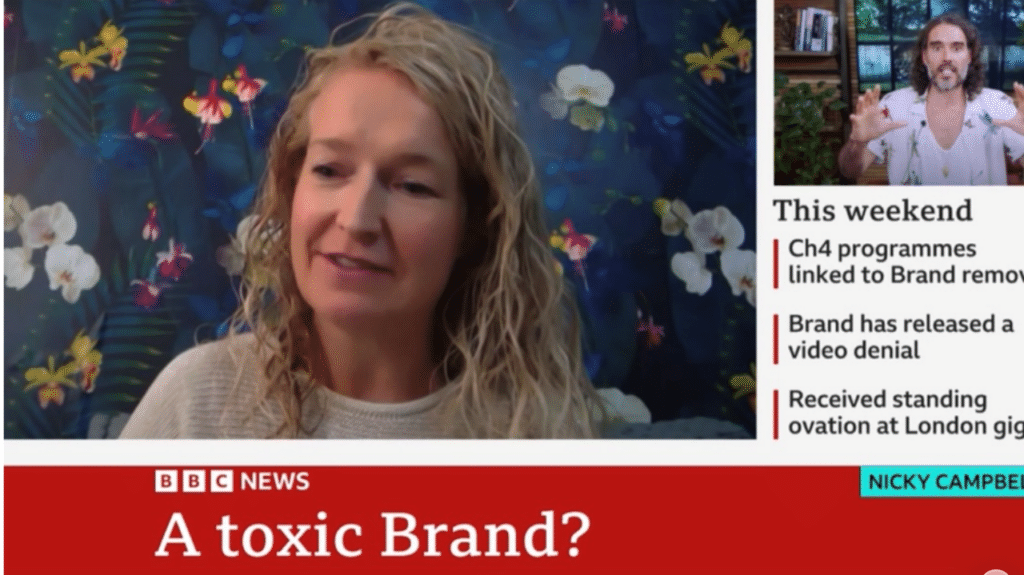
When the Russell Brand story first broke in 2023, I found myself on BBC News and radio talking about something that has fascinated and troubled me throughout my career working with organisations: how really decent people, in perfectly respectable businesses, can end up tolerating behaviour that goes against everything they stand for.
Following Brand’s conviction for rape and sexual assault last week, much of the reporting has understandably focused on the organisations and individuals who tolerated his behaviour, and those who may have either deliberately encouraged it or inadvertently facilitated it.
And of course we read these stories, feel outrage and think, “How on earth could they have let that happen? Someone should have acted sooner.”
It’s reassuring, isn’t it, to think that the failings were SO obvious, that WE would have done something differently.
But here’s a test. Find someone today who’ll happily admit they loved listening to Russell Brand on the radio back in the day, or went willingly to one of his live shows. Bet you can’t find many. But lots of US did. Otherwise, he wouldn’t have become such a commercially valuable asset in the first place.
You get my point. Looking from the outside in we can be critical without being introspective. But perhaps there’s something very normal, very human, but deeply troubling about what we do when we’re faced with poor behaviour in powerful, charming or successful people.
So, before we all jump on the ‘them’ bandwagon, I thought it might be useful to explore five uncomfortable truths about behaviour at work and the science that helps explain why ‘we’ might not behave at our collective best when someone commercially important and charismatic is aggressive, rude, inappropriately jokey or, vile worst case, sickeningly predatory.
Because if we don’t honestly look at the complexity, I don’t think things will ever really change.
If we know the psychological and neuroscience ‘rules’, we can start to be the exception to them.
1. “It wouldn’t happen here.”
Wouldn’t it?
We might not be turning a blind eye to behaviour as extreme as the criminal offences in this case, but in most organisations I’ve worked with, there’s someone whose behaviour isn’t what it should be. People wince a bit when it happens, or talk about it together, yet somehow the person behaving badly seems to get away with it.
This disconnect and ‘stalling’ often happens when you’ve got a really commercial high performer who isn’t living your values. That’s when life gets especially difficult, because sometimes there can be an awful lot at stake, both personally and professionally, in calling out that behaviour.
Imagine it’s getting towards the end of your financial year and your best performer, perhaps the person who’s going to make the difference between hitting your profit targets or securing a pivotal piece of new business which could protect thousands of jobs, is the very person whose behaviour you need to challenge.
You can see the dilemma. And you can see the excuses.
I’ll do it when we’ve got the financial results in. After we’ve signed the deal. After the shareholder meeting. Tomorrow.
But what we’re accidentally doing is normalising the behaviour. We’re telling everyone watching (who might not appreciate the commercial implications) that it must be okay because nobody with real clout seems to think it’s bad enough to take serious action. And we’re giving the individual concerned a powerful message that whatever they’re doing, it isn’t bad enough for them to need to change.
Sometimes the very strengths that made someone successful in the first place can lead to this ‘shadow’ and unpleasant side. Charisma can become manipulation. Confidence can become arrogance. Drive can become aggression. And the more commercially successful that person becomes, the easier it is for everyone – including them – to confuse the two.
How many times have you heard things like “It’s just Dave being Dave” or “We have to take the rough with the smooth with Debbie”?
Maybe if you hear that today, just calling it out would help. “Yes but is that really OK anymore?”
2. “Well, I’d have spoken up.”
Maybe you would. But maybe you wouldn’t.
When we’re faced with threatening behaviour, our brains don’t always give us the luxury of choosing a response. Sometimes we fight. We might shout back, challenge what’s happening and say that’s not okay. But equally, we might flee, freeze or appease.
We might leave the room, say nothing, nervously laugh along, or tell someone that it’s okay and we’ll talk about it later. And either ‘forget’ or just not know where to start, putting off doing anything ‘until next time’.
Fight, flight, freeze and appease are all normal human responses to threat, but often in the heat of the moment, our bodies choose which one we do rather than our best, conscious self. You might hope you will fight, but then you freeze and blame yourself. You feel ashamed you did nothing, and that makes it harder to do something later on because you will have to admit that to yourself and others.
And the threat doesn’t have to be physical. David Rock’s SCARF model reminds us that threats to our Status, Certainty, Autonomy, Relatedness (our relationships and sense of belonging) and Fairness can all trigger powerful responses.
Every bone in your body might be telling you it’s not safe to take a stand. They won’t like you. You’ll be ostracised. You won’t be one of the crowd anymore.
And what if you’re already the only person in the room who looks different? I’ve certainly been a sole junior woman in a room of senior men where one of them has said something ‘off’. Perhaps you have a different skin colour or different preferences about who you spend your life with. It can be really hard to be ‘other’ in the first place, and standing alone risks making you even more ‘other’.
Our desire to fit in and succeed by fitting in is compelling.
So maybe this month if someone confides in you be careful about asking why someone didn’t speak up sooner. Particularly someone who has experienced abuse or has less organisational power. Their response to a threat isn’t evidence that what happened was okay.
3. “The person behaving badly should just be sacked.”
Yes. And no.
Let’s be absolutely clear. Criminal behaviour and serious misconduct require appropriate investigation, safeguarding and consequences. I’m not suggesting for a split second that someone who has committed sexual assault should simply be coached into behaving better.
But what about the person who’s bullying, humiliating, intimidating or consistently undermining the people around them? Where did it come from? What’s underneath it?
All too often, particularly when that person is senior or commercially valuable, they leave, sometimes under a settlement agreement, potentially with a payment to encourage a quiet departure.
And then what?
Sometimes there’s no real reckoning, no understanding of what’s sitting underneath the behaviour, for them or anyone else, and no meaningful change. The person simply goes somewhere else and repeats the pattern.
Poor performance gets passed around.
I’ve done a lot of work in this space, and where someone’s behaviour has become intrinsically enmeshed with their success, helping them change can be really hard work. For HR, their manager and the individual themselves.
But when someone genuinely does change, the impact on the organisation and the individual can be astonishing.
Really great leaders don’t always have the person leave. Where it’s appropriate and safe, they help them stay and make the really difficult transition into behaving better, with clear accountability and support.
If this comes up in the coming weeks and you are part of a discussion on performance maybe ask “In a years time, if Jo became someone who used to shout and throw their weight around, but now tells a true story of why they don’t anymore, and that they’re embarrassed they used to, would that be a powerful thing to have around here?”
4. “They should just change their behaviour. NOW.”
If only it were that easy.
Imagine being asked to stop doing something that you’ve previously been richly rewarded for. Something that has helped you get promoted, earn bonuses, win business or become the most successful person in the room.
You’ve literally got poor behaviour coded in alongside success.
And every time someone has tolerated the highs and lows, excused the occasional outburst because the results were brilliant, or simply looked the other way, they’ve helped reinforce that pattern.
Changing that isn’t likely to happen as a result of someone telling you ‘just stop it’. It’s asking someone to rethink behaviour they’ve spent years believing works. And their brain might be telling them it doesn’t matter because, after all, nobody has seriously challenged it before.
Now this absolutely DOESN’T excuse poor behaviour. This simply explains why acting as early as possible is so important. The longer we tolerate small indiscretions, the more established those behaviours can become, and the harder it can be for someone to change.
There’s a commercial opportunity here too. Someone who believes their aggressive behaviour is responsible for their success might actually become even more successful if they stopped putting everyone around them into threat mode.
Because the science supports that when people feel psychologically safer, they’re better able to think, contribute, challenge and do their best work.
Start being the person who asks, as of today – “What if this person who’s already our best performer could be even better if we helped them change?
5. “It’s not that difficult. They should just have done something sooner.”
It’s easy when it’s them and they. It’s much harder when it’s us and me.
What if you’re the person who recruited them? What if you’ve witnessed the behaviour on several occasions and done nothing? What if you promoted them, defended them, or told someone who complained that they’re actually a really good person once you get to know them?
It’s really, really hard for any human being to decide to do something different from what they’ve always done under those circumstances, particularly when the individual concerned is powerful, charismatic or just plain frightening.
And sometimes it’s good old-fashioned fear that keeps organisations stuck.
Fear of the financial risk. Fear of it coming out. Fear of having to confront the failure of not addressing it before.
But just old-fashioned fear too. Who walks towards a situation where they might be shouted at in front of peers? Who wants to be humiliated by someone who’s angry that they’ve been called out? Not many of us.
It’s unhelpful too to underestimate the work involved. Managing serious behavioural problems can be emotionally exhausting, complicated and enormously time-consuming, particularly for HR teams, often trying to do this alongside their other day job with their hands tied if senior leaders are nervous about the impact on sales, profit or customer relationships.
Sometimes our brains will even help us find excuses.
Well, yes, I know that sort of thing happens here, but it’s not THAT bad.
Yes, but that’s different because…
Is it really?
The events might not be as dramatic as those we’ve seen in the Brand case, but someone going home in tears every day because they’re being bullied or excluded is still pretty bad. And that person is unlikely to be doing their best work.
Which brings me to the opportunity.
So what can we do differently on this particular Monday?
Look around your organisation and ask yourself where you’re collectively living your values. REALLY living them.
Because if someone isn’t living them, and you’re not calling out that behaviour, insisting it changes and, where appropriate, helping that person work out what’s sitting underneath it, you’re contributing to the problem too.
And don’t just look at the people you don’t like. That’s easy. Look at your friends, your favourite colleagues, your most successful people. And yourself.
There’s something related and horrific about the often-quoted challenge that most women will know someone who has experienced sexual violence, yet many men would say they don’t know a rapist.
If you’ve let something go on for too long, don’t beat yourself up. That’s a very normal human thing to do. But how about today being the day you decide to do something different?
Draw a line in the sand. Find a way to acknowledge what hasn’t been right. Support people who speak up, protect them from retaliation, hold people accountable and, where change is possible, help them make it.
And if you’re a person who, deep down, knows they have a behaviour that needs to change, it’s not necessarily too late. An old dog really can learn new tricks. Ask for some help. I’d be amazed if someone didn’t step up to try.
This isn’t simply about avoiding the next reputational disaster. It’s about creating an organisation where people don’t spend their days feeling threatened, excluded or frightened, and can instead put that brainpower into doing brilliant work.
It makes commercial sense. People do better work when they feel psychologically safe.
And if your values aren’t going to help you make the difficult decisions, particularly when it’s your most successful people who aren’t living them, perhaps you shouldn’t bother putting them on the wall in the first place.


We listen. We understand. We are confident that we can create a bespoke solution
that really adds to your bottom line.